Field note · 01
The answer key ends
For the first twenty-odd years of my life, every problem I was handed came with an answer key. Not always available to me, but it existed. Someone at the back of the book knew.
Most of what I do now has no answer to look up. The useful skill turned out not to be knowing things, but staying calm in the part where nobody does.
What changes when the key disappears
The instinct is to look for someone who has done this exact thing before. It is a good instinct and it works far more often than people admit. But there is a category of problem where the search itself is the delay.
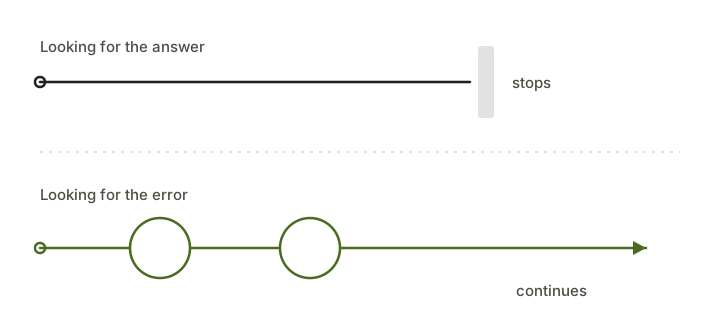
The question stops being what is the right answer and starts being what is the cheapest way to find out I am wrong.
That reframing is most of it. Once the goal is finding the error rather than avoiding it, a lot of the anxiety drains out of the work.
Three things that helped
- Shrink the bet. Any decision that can be made twice cheaply is not really a decision. Most of them can be.
- Write the assumption down. Not to be rigorous — to notice, later, which one was actually load-bearing.
- Separate confidence from commitment. You can act decisively on something you believe 60%, as long as you have not spent the next six months on it.
Photos work the same way — a Markdown image on its own line becomes a figure, and the quoted title becomes the caption:

None of this makes the uncertainty go away. It just stops the uncertainty from being the thing you are managing, instead of the work.